THE LOOK
Leaning every which way
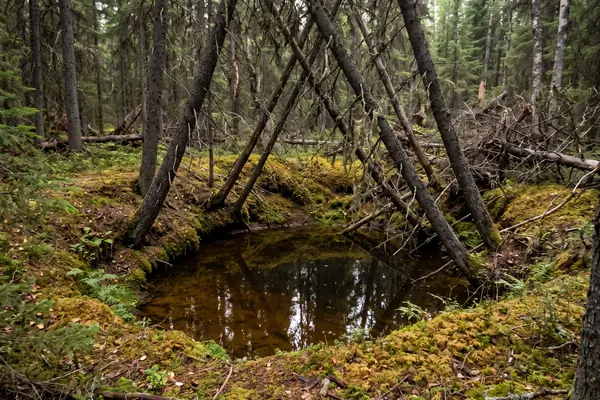
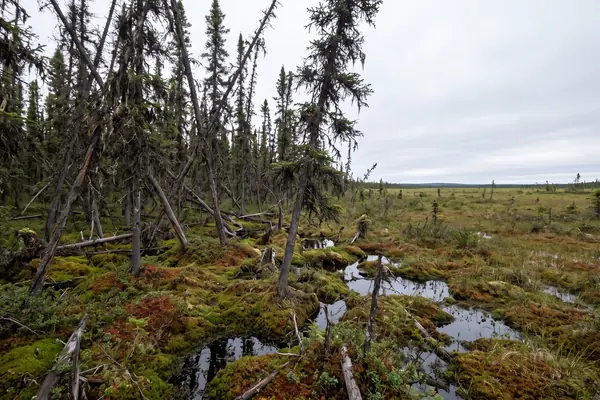
The Geophysical Institute in Alaska describes drunken forests of black spruce that tilt in all directions. Melting permafrost is the most common cause.
Check the groundWHAT THE SCIENTISTS SAY
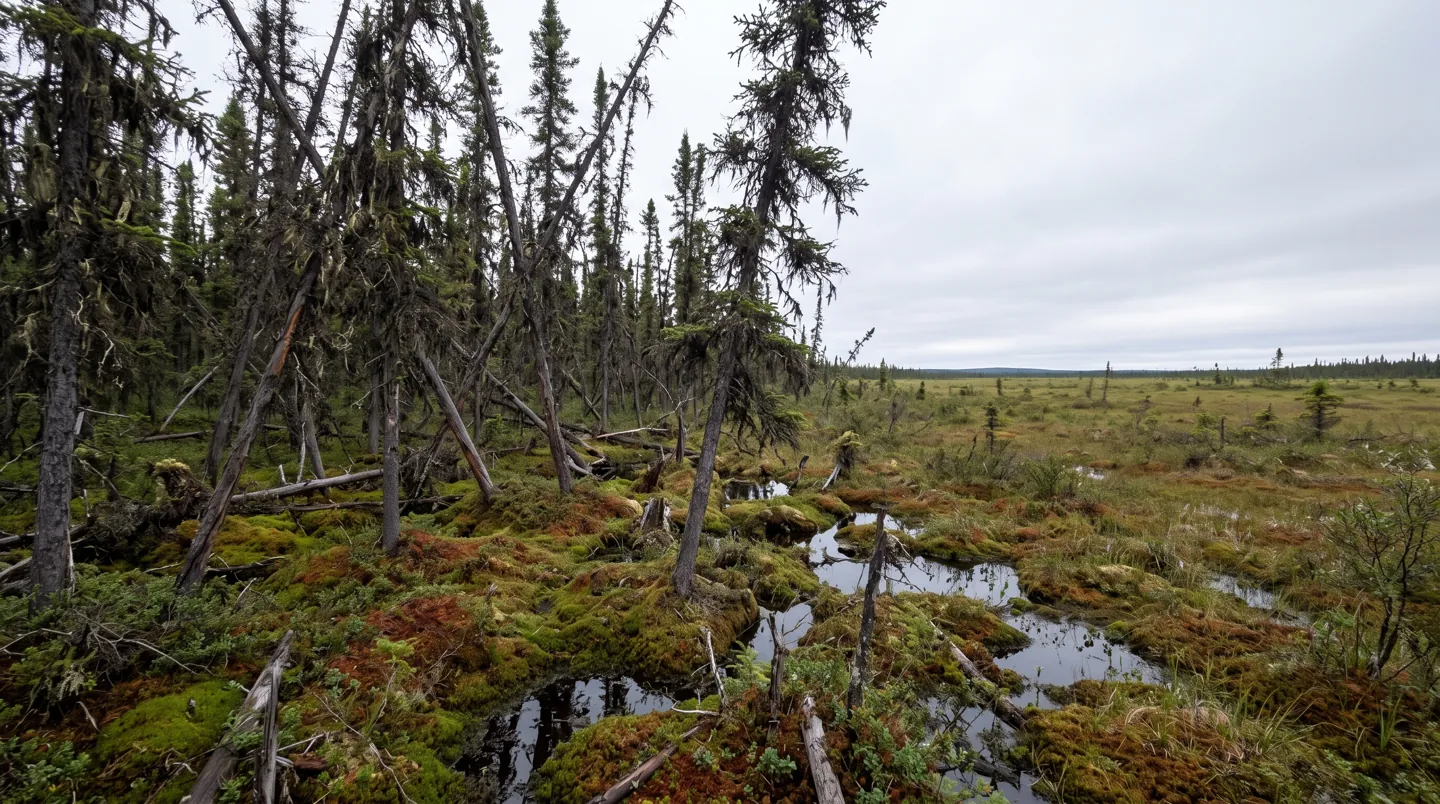
In parts of Alaska and Siberia, whole stands of spruce tilt in all directions at once.
Scientists call them drunken forests. The cause lies underground: ice-rich frozen soil that has started to thaw. This independent guide explains, from university and NASA sources, what permafrost is, how a thaw slump forms, and why the same process bends roads and cracks houses.
FROZEN for now
THE SHORT ANSWER
Trees grow upright on frozen soil for decades.
When the ice below melts, the surface sags and the trees go with it.
THE LOOK
The Geophysical Institute in Alaska describes drunken forests of black spruce that tilt in all directions. Melting permafrost is the most common cause.
Check the groundTHE CAUSE
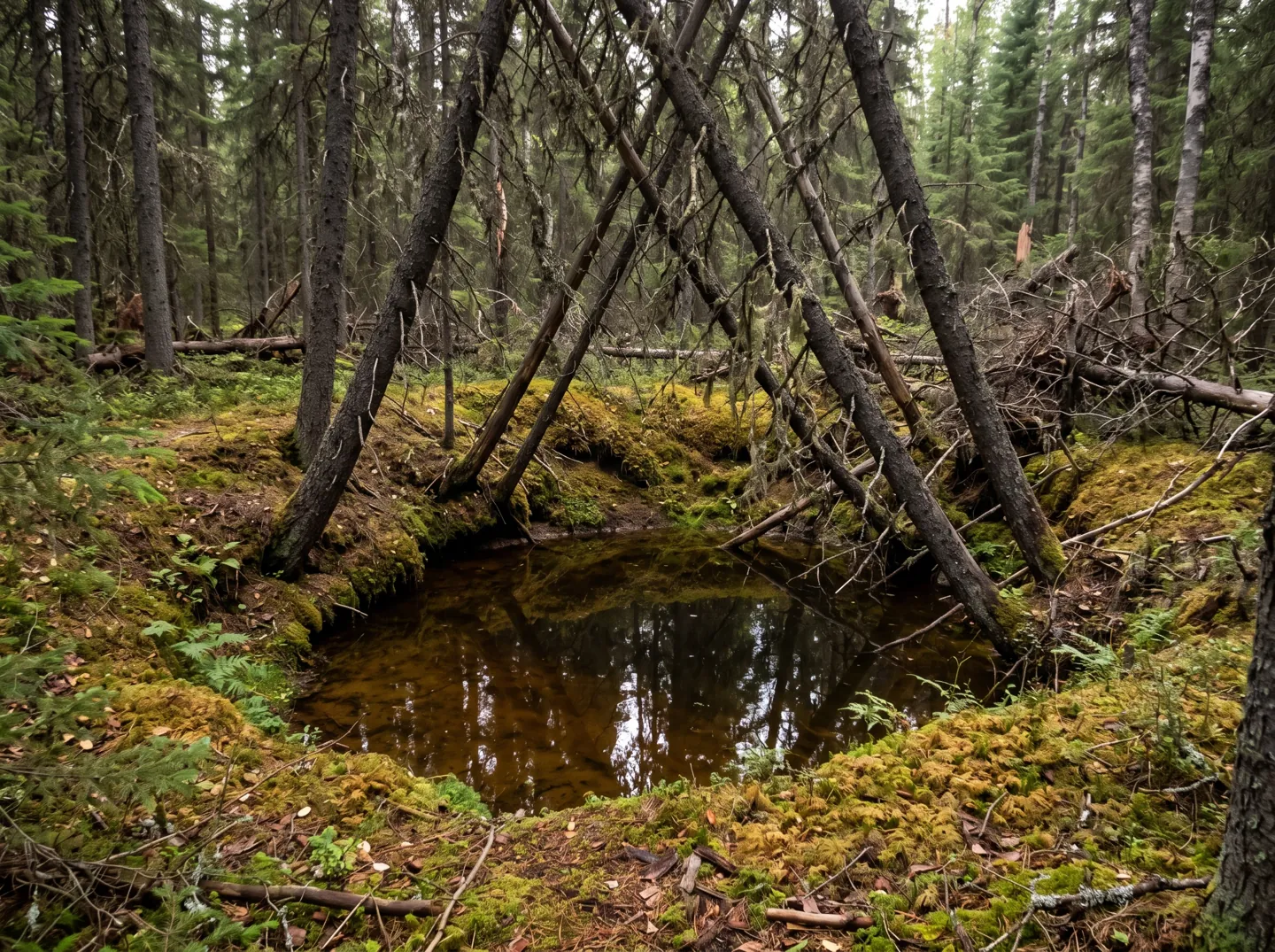
When ice-rich permafrost thaws, the ground surface sags into a depression called a thermokarst. Trees with wide, shallow roots bow towards it.
See the numbersTHE KNOCK-ON
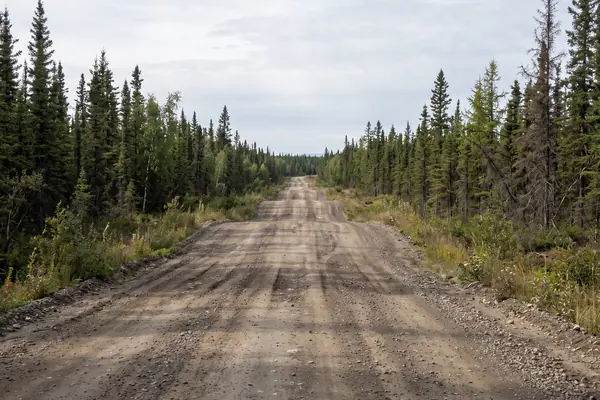
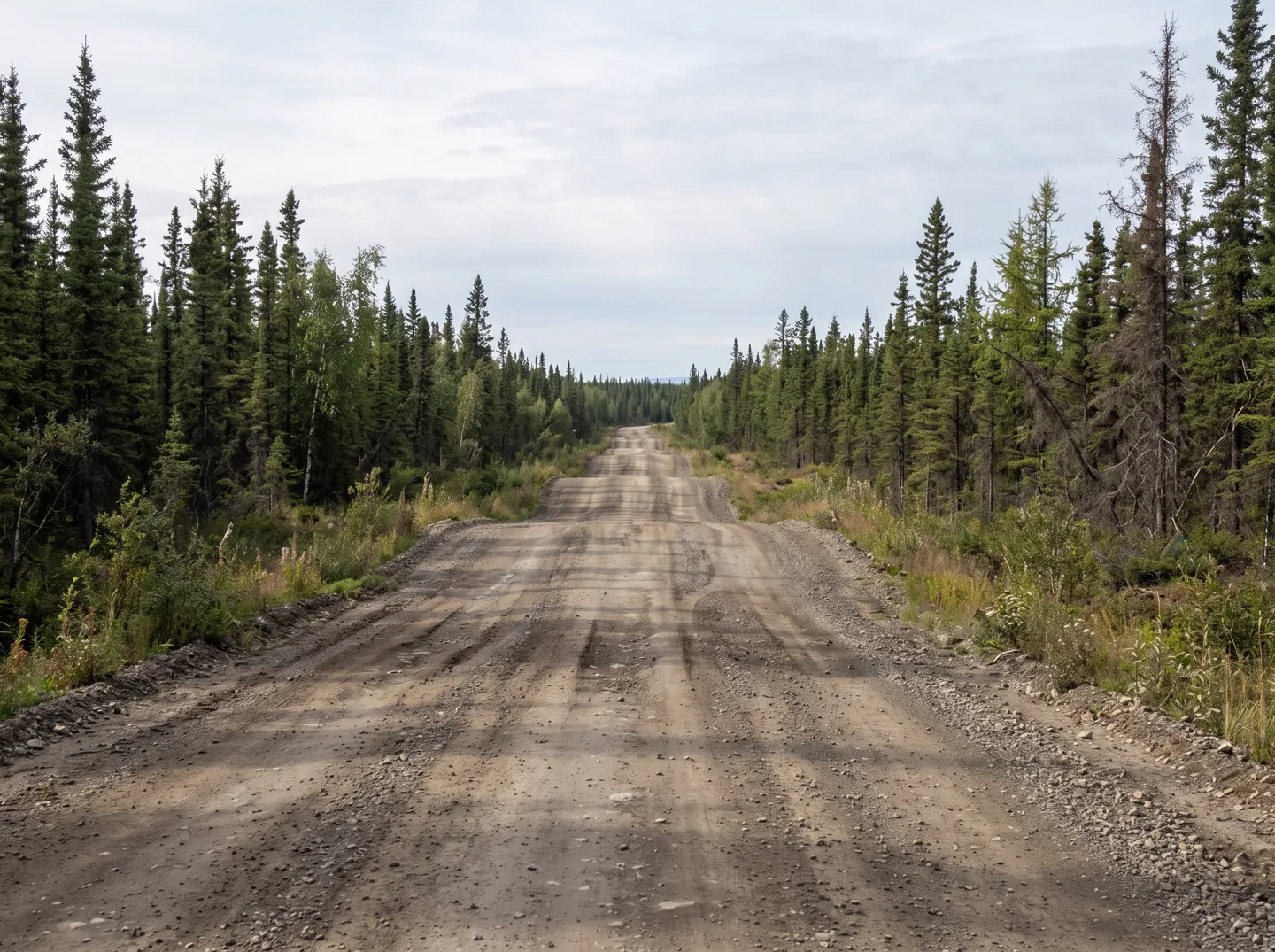
NASA says frozen permafrost is harder than concrete, but thawing ground can damage houses and roads as it shifts. In interior Alaska, roads dip into a familiar roller coaster.
How it unfoldsA QUICK GROUND CHECK
Pick a type of frozen ground to see how scientists define it. The bar shows how long the ground stays frozen compared with the others.
Definitions from the US National Snow and Ice Data Center (NSIDC) and NASA.
TWO NUMBERS WORTH KNOWING
One number for the whole hemisphere,
one for a single spruce tree.
≈ 25%
Exposed Northern Hemisphere land on permafrost
About 23 million square kilometres, roughly 65 percent of it in Eurasia and 35 percent in North America and Greenland. It reaches as far north as 84°N in Greenland and as far south as 26°N in the Himalaya.
EXTENT · NSIDC
≈ 50 years
Years trees may grow normally first
Spruce can grow upright for perhaps 50 years before the permafrost warms enough to thaw and form a thermokarst. One curved spruce began righting itself after a slump formed 120 years earlier.
TIMING · GEOPHYSICAL INSTITUTE, ALASKA
Estimates of permafrost extent depend on definition and method: NASA's education pages give a figure of around 15 percent of Northern Hemisphere land. Both describe a very large frozen area.
FOUR STEPS TO A DRUNKEN FOREST
The process the Geophysical Institute describes takes decades, not days.
Spruce germinate on a surface that looks solid, because ice-rich permafrost lies just below.
With frozen soil underneath, trees adapt wide, shallow root systems to hold on to the thin soil above the permafrost.
Warming, disturbance or even a well-used animal trail can let the permafrost thaw. The surface slumps into a thermokarst.
Trees bow towards the new hollows. Some grow back towards the sky, leaving a curved trunk that records when the ground moved.
WHY IT MATTERS BEYOND THE FOREST
NASA explains that permafrost soils near the surface hold large amounts of organic carbon from dead plants that could not rot in the cold. When the ground thaws, microbes start breaking it down and release carbon dioxide and methane, which warm the planet further.
That is why scientists watch permafrost from space as well as on the ground. NASA's SMAP satellite measures moisture in the top 5 cm of soil everywhere on Earth and can tell whether that water is frozen or thawed.
Questions
A stand of trees, often black spruce, that lean in all directions. The Geophysical Institute at the University of Alaska Fairbanks says melting permafrost is the most common cause, though landslides and earthquakes can also create one.
Ground, including soil, sand, sediment or rock, that stays at or below 0 °C for at least two years. It is defined by temperature alone and can contain more than 30 percent ice.
The scientific name for a ground slump caused by melting permafrost. When ice-rich permafrost thaws, the surface sags and nearby trees tilt towards the depression.
NSIDC estimates about 23 million square kilometres, or about 25 percent of exposed land in the Northern Hemisphere. Most of it lies north of 60°N in Russia, Canada and northern Alaska.
Sometimes. Researchers in Alaska found a spruce with a bow-shaped trunk whose rings showed it began righting itself after a thermokarst formed 120 years earlier.
Sources
ABOUT THIS NAME
doodledrunks.com is part of the DoodleSale portfolio. It isn't in an auction right now, but you can ask about leasing it.